Our Amazing History
Do you remember the joy of visiting the zoo as a child? Whether riding to the zoo in the family car or on a big yellow school bus for a field trip, the anticipation of seeing the many exotic animals from far-away places created a great deal of excitement and anticipation. Once you arrived, you were likely anxious to see as many animals as you could that day, especially your favorites, and enjoy the beauty of the zoo and its many creatures… the majestic lion, the silverback gorilla, the graceful giraffe, the athletic dolphins, the colorful fish dancing in the aquarium and countless others. A zoo visit creates many cherished and lasting memories. Those who visited as children, often return as adults, sometimes with their own children or grandchildren, re-living those wonderful memories and making new ones to cherish.
Brookfield Zoo’s began when Edith Rockefeller McCormick offered to donate 83 acres of land in December, 1919 to create a modern zoological garden. In 1934, the Chicago Zoological Society opened the doors of Brookfield Zoo and welcomed their first guests. While our history is filled with countless historical and groundbreaking “firsts” in animal care, conservation, and business, there are some that showcase the evolution of Brookfield Zoo and how the Chicago Zoological Society remains passionately and steadfastly committed to our vision and conservation mission.
The Amazing History of Brookfield Zoo
 1934
1934
On July 1, Brookfield Zoo, with buildings designed by Edwin H. Clark, architect, opened to the public. Cookie Cockatoo arrived. This popular and most beloved bird, was later certified in 2014 by Guinness World Records as the oldest living parrot, and Cookie died in 2016.
 1941
1941
Georgie-Joe was the first black rhino born in any zoo. Listed as “critically endangered” on the IUCN Red List, black rhinos have been hunted almost to extinction for their horns. They are threatened by habitat loss and human encroachment, and their population is estimated to have decreased by approximately 96% between 1970 and 1992. Today, the conservation of endangered species, like black rhinos, is a hallmark of the Society.
1952
The first Brookfield Zoo animal hospital opened. At that time, Brookfield Zoo was one of the first three zoos in the country with a dedicated animal hospital.
 1953
1953
The Children’s Zoo opened, beginning decades of connections between Chicagoland children, families and domestic native animals.
 1957
1957
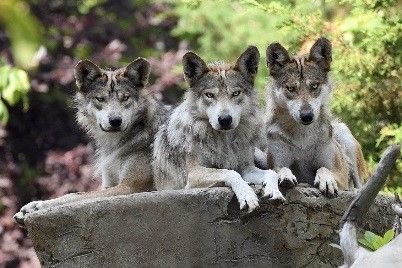
Home to Mexican Gray Wolves, the new Wolf Woods exhibit was carved out of a forested area in the western portion of Brookfield Zoo. Soon, staff became involved in ground-breaking studies on wolf behavior that continue to this day. Mexican gray wolves were considered extinct in the wild until their reintroduction into Arizona and New Mexico in 1998.
1959 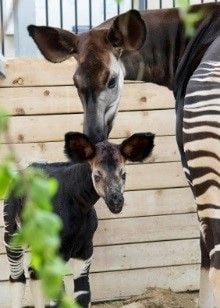
Mr. G was the first okapi born in any U.S. zoo. Most closely related to the giraffe and first discovered in 1901, the okapi become another species studied by Society researchers. Listed as “endangered” on the IUCN Red List, okapi are solitary animals and depend on their senses of smell and hearing, as their eyesight is relatively poor -- and they have a long blue tongue!

1961
The original Seven Seas Panorama (located where The Living Coast now stands) opened as the country’s first inland dolphinarium.
1969
The sale of marshmallow was discontinued. The Society became a leader in animal nutrition and was one of the few zoological organizations in the world with professional animal nutritionists on staff.
 1977
1977
The Parents Program (now called the Share the Care program) was launched. This valuable program support contributes directly to the expert care and feeding of the animals.
 1979
1979
Affie Elephant arrived at Brookfield Zoo. As a beloved ambassador for the wild, Affie inspired generations of Chicagoans to learn about conservation issues around the world. Conservation efforts have grown significantly since then, as the Chicago Zoological Society partners with more than 100 other accredited zoos and aquariums and the New York-based Wildlife Conservation Society in the 96 Elephants Campaign. And, yes, this is our President and CEO Dr. Stuart Strahl’s selfie, taken on World Elephant Day 2014.
 1980
1980
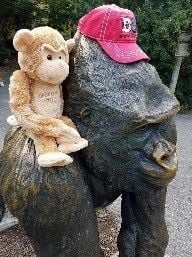
Samson Gorilla arrived. He sired five offspring, adding important genetic diversity to zoo gorilla populations. A bronze statue commemorating this popular primate now stands at the entrance to Tropic World.
1985
The Society further solidified its conservation efforts by establishing a Conservation Biology Department, staffed by world-renowned scientists and researchers.
1990 
The Society helped found the Declining Amphibian Populations Task Force (“DAPTF”) to help save amphibians around the world. DAPTF continues to operate through the scientific community throughout the world to collect and share important data on the status of amphibian populations globally. Dr. George B. Rabb, Zoo Director and President of the Society at the time, was a founding member of DAPTF. He continued to play a leadership role with respect to amphibian conservation, working with the Amphibian Survival Alliance and Amphibian Ark, working tirelessly until his passing in July, 2017.
Dr. Robert Lacy developed VORTEX, the first software program used to cooperatively manage zoo breeding programs around the world. VORTEX is now part of the free Species Conservation Toolkit Initiative, a group of software programs used to help predict and secure the future of wildlife species in a changing world. About SCTI
1992
A specialist in animal enrichment was hired, part of Society efforts to provide the best possible care and welfare for the animals.
 1993
1993
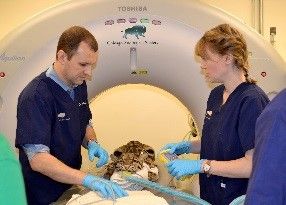
The new, state-of-the-art Brookfield Zoo animal hospital opened, enhancing animal care efforts and making the Society a leader in zoological medicine.
1994
Brookfield Zoo veterinarians and neurosurgeons from Loyola Medical Center performed the first-ever brain surgery on a great ape, successfully removing a tumor from Chicory, a silverback western lowland gorilla.

1996
The Society became a founding member of Chicago Wilderness, a leading group that restores and protects hundreds of acres of wild areas in Chicagoland.
Binti Jua western lowland gorilla rescued a boy who fell into the Tropic World exhibit.
2000
The Society helps launch a new discipline called “conservation psychology,” the scientific study of the relationship between people and nature.
 2001
2001
Hamill Family Play Zoo opened – this was the first exhibit based on nature play for children ages birth-10 and their families. Children have the opportunity to have hands-on experiences, even getting up close and personal with some of the animals!
2006
The Center for Conservation Leadership is launched, focusing the Society’s efforts on creating conservation leaders, protecting the natural world, and outreach and education around Chicagoland.
2008
The Center for the Science of Animal Welfare was created to address animal welfare needs by applying a broad range of sciences (veterinary medicine, animal nutrition, population genetics, animal welfare research, behavioral and animal husbandry, species survival plans, and more) to evaluate animal well-being through a program designed to advance animal care and welfare at Brookfield Zoo.
 2015
2015
CZS’s Sarasota Dolphin Research Program (SDRP) conducts the world’s longest-running study of a wild dolphin population. In 2015, the Sarasota Bay dolphins were used as a crucial reference population for an investigation of impacts of the Deepwater Horizon oil spill on dolphin health, survival, and reproduction. Researchers consulted on recovery plans for endangered species, and the team’s efforts resulted in 16 peer-reviewed scientific publications. http://www.sarasotadolphin.org/
2016 
Brookfield Zoo is the first zoo in the world to receive the American Humane Association’s “Humane Certified™” seal.

The Society launched the world’s first zoo-based Radiology Consultation Service under the direction of Dr. Marina Ivancic, the first and only full-time radiologist in any zoo or aquarium.
 2017
2017
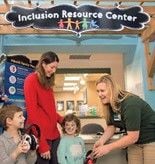
The “Zoo for All” initiative is launched, building an inclusive conservation movement--striving to provide opportunities that bring meaningful experiences to all guests.
CZS became the first organization in Illinois to work with ProjectSEARCH interns ages 24 and older. ProjectSEARCH helps individuals with disabilities prepare for gainful employment.

CZS’ leading conservation efforts helped save endangered pangolins by exhibiting this rare and unique animal found in Africa and Asia for the first time in the Zoo’s history. Facing extinction, these very distinctive-looking animals with a body that is covered with sharp, artichoke-shaped scales was officially declared endangered in January, 2017. CZS Leading Conservation - Pangolins
 2018
2018
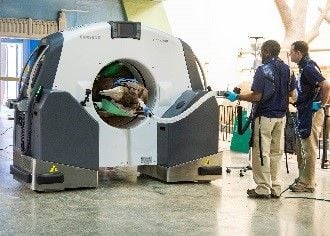
On April 29, Layla, a 7½-year-old, 2,300-pound eastern black rhinoceros, underwent what is believed to be the first CT (computed tomography) scan ever performed on this species. On May 15, Layla underwent a second CT scan, a week after she received a life-saving surgery performed by our dedicated team of veterinarians and veterinary specialists. Blog: Layla's first CT scan Layla's first CT scan Layla's second CT scan


